Whether you’re a startup founder, product manager, or curious developer, understanding cloud infrastructure is crucial in 2025. The cloud powers everything from mobile apps and websites to AI systems and global enterprises. In this beginner-friendly guide, we’ll break down what cloud infrastructure is, how it works, why it matters—and how Antyxsoft Cloud helps you get […]
Νέλη Μωυσιάδου
Aug 23, 2026
Share
Whether you’re a startup founder, product manager, or curious developer, understanding cloud infrastructure is crucial in 2025. The cloud powers everything from mobile apps and websites to AI systems and global enterprises.
In this beginner-friendly guide, we’ll break down what cloud infrastructure is, how it works, why it matters—and how Antyxsoft Cloud helps you get started quickly and securely.
What Is Cloud Infrastructure?
Cloud infrastructure refers to the hardware and software components—like servers, storage, networking, and virtualization—that support computing resources delivered over the internet (a.k.a. “the cloud”).
Think of it like renting a supercomputer that you can scale up or down anytime—without buying physical hardware.
Core Components of Cloud Infrastructure
Compute Virtual machines (VMs), containers, or serverless functions that run your apps and services.
Storage Object, block, and file storage to hold your data (think: images, databases, backups).
Networking Secure ways for your apps, users, and data to connect globally with minimal latency.
Virtualization Splits physical servers into multiple isolated virtual environments—boosting efficiency and flexibility.
Security & Monitoring Firewalls, access controls, encryption, and real-time analytics to protect and manage infrastructure.
Cloud vs. Traditional Infrastructure
Feature
Traditional (On-Prem)
Cloud (IaaS)
Upfront Cost
High (hardware, setup)
Low (pay-as-you-go)
Scalability
Manual, slow
Instant, automatic
Maintenance
Your responsibility
Handled by provider
Flexibility
Limited
High
Deployment Speed
Days to weeks
Minutes
Benefits of Cloud Infrastructure
Cost Efficiency – Only pay for what you use
Global Reach – Deploy apps close to your users
Reliability – Built-in redundancy and failover
Security – Enterprise-grade protection and compliance
Speed to Market – Focus on building, not maintaining hardware
Getting Started with Antyxsoft Cloud
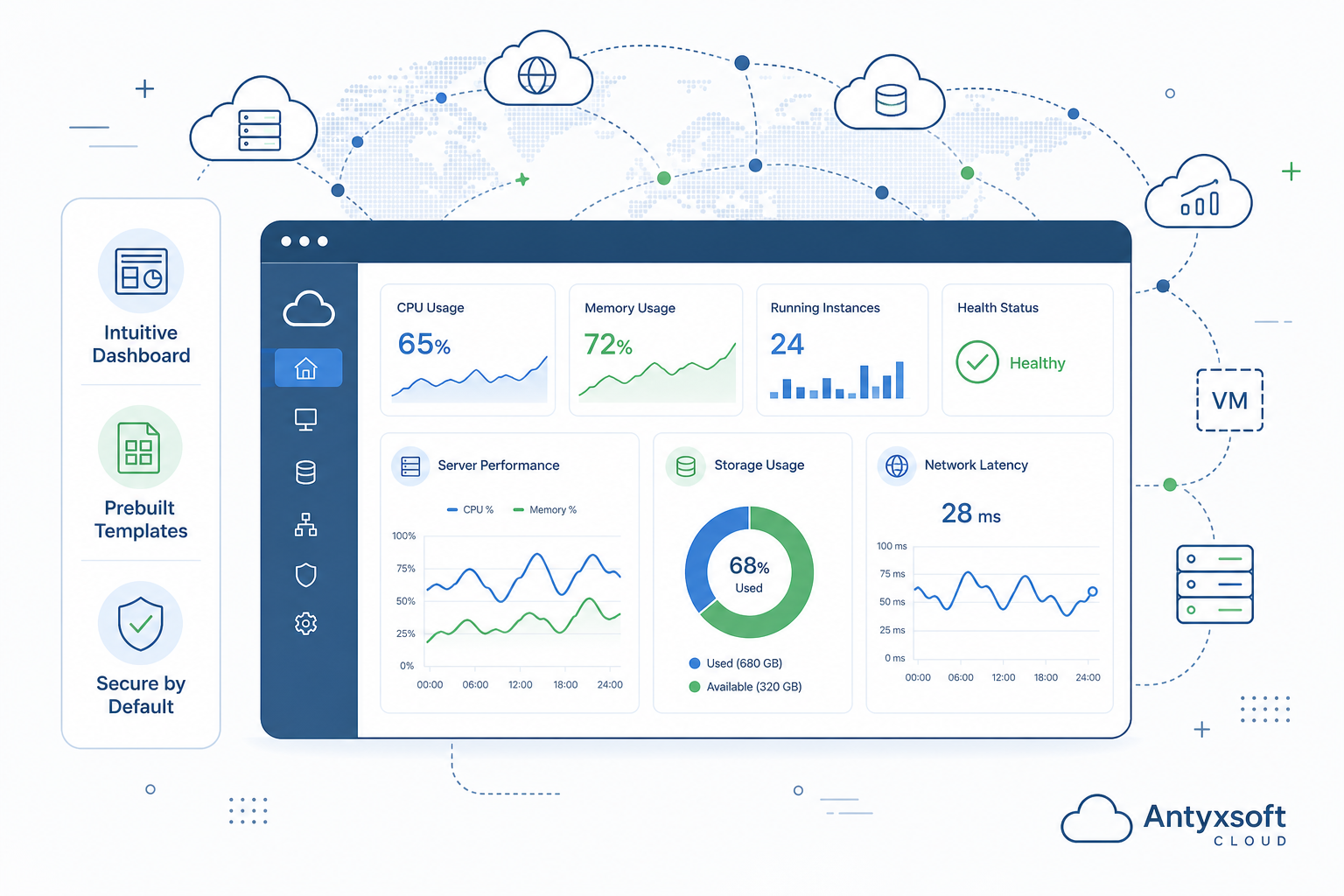
Antyxsoft Cloud makes it easy for beginners to launch infrastructure with confidence:
Intuitive Dashboard – No steep learning curve
Prebuilt Templates – Launch apps, databases, and clusters in one click
Secure by Default – End-to-end encryption, RBAC, and auto-patching
Usage-Based Billing – Scale as you grow, without surprise bills
Tips for Beginners
Start Small – Deploy a simple website or app first
Understand Pricing – Watch resource usage and billing metrics
Use Tags & Labels – Organize cloud resources from the start
Enable Backups – Always protect your data
Secure Your Access – Use MFA, rotate keys, and monitor logs
Get Started with Antyxsoft
Ready to experience the future of cloud technology? Register at our platform and try Antyxsoft Cloud today.
Interested in growing with us? Become a partner and unlock new opportunities.